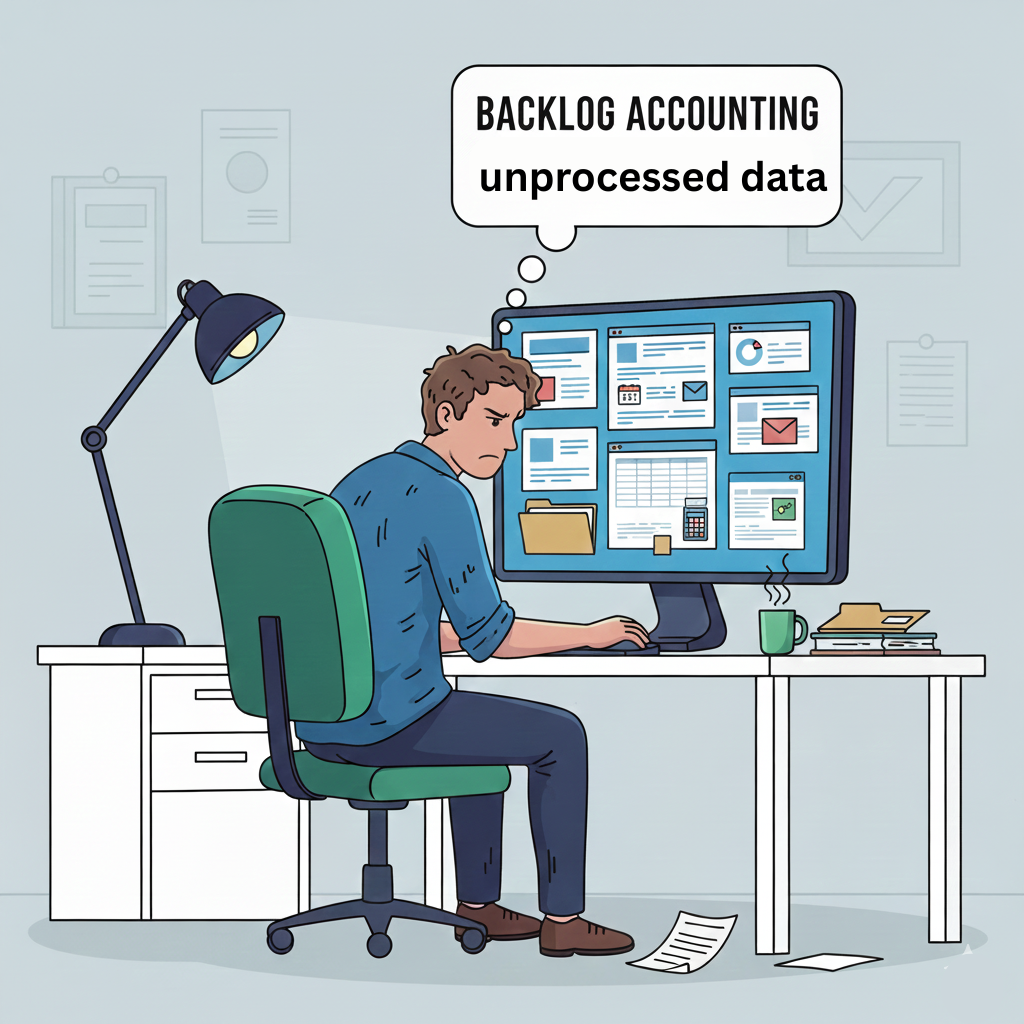
Backlog accounting refers to pending, incomplete, or delayed accounting entries that have not been recorded or updated on time. Many businesses in the UAE accumulate backlog unknowingly, especially during periods of rapid growth or operational changes.
When accounting records are not updated regularly, businesses lose visibility over cash flow, VAT liability, and true profitability. Over time, this creates compliance risks and financial confusion.
Clearing accounting backlog restores financial clarity and ensures businesses stay compliant with UAE regulations. The earlier backlog is addressed, the easier and more cost-effective it is to resolve.
Warning: Ignoring accounting backlog can lead to incorrect VAT filings, penalties, and difficulties during audits or corporate tax submissions.
📌 How Accounting Backlogs Happen
Accounting backlog usually develops due to one or more of the following reasons:
- Delayed entry of invoices and expenses
- Lack of trained accounting staff
- Manual bookkeeping or Excel-based records
- Poor document management
- Ignoring monthly reconciliations
- Rapid business growth without system upgrades
Small and medium businesses often prioritize operations and sales, leaving accounting tasks for later—this is how backlog begins.
📊 Problems Caused by Accounting Backlog
Backlog accounting affects more than bookkeeping. It impacts compliance, decision-making, and business credibility.
- Incorrect or delayed VAT return filing
- Unclear cash flow position
- Difficulty tracking receivables and payables
- Audit failures and missing documentation
- Inaccurate profit and loss reporting
Businesses with backlog often discover problems only when faced with tax notices, audits, or funding requirements.
Do You Have Pending Accounting Records?
Clear Your Accounting Backlog →🛠️ How to Clear Accounting Backlog Step-by-Step
1. Collect All Documents: Gather invoices, receipts, bank statements, payroll data, and expense records.
2. Segment the Backlog: Divide pending entries month-wise or year-wise to maintain accuracy.
3. Record Transactions Properly: Enter data using correct accounting heads and VAT treatment.
4. Reconcile Accounts: Match bank balances, supplier accounts, customer receivables, and VAT records.
5. Review & Finalize: Verify reports and correct errors before finalizing financial statements.
💼 How Proper Accounting Prevents Future Backlogs
Proper accounting ensures that transactions are recorded regularly, documents are organized, and financial reports remain up to date.
Using structured accounting systems and professional support allows businesses to avoid future backlog accumulation.
Best Practices to Avoid Backlog
- Update accounts monthly
- Digitize invoices and receipts
- Perform regular bank reconciliations
- Use accounting software instead of spreadsheets
- Outsource bookkeeping if internal resources are limited
Key Takeaways
- Accounting backlog creates financial and compliance risks
- Backlogs occur due to delayed entries and poor systems
- Structured accounting helps clear backlog efficiently
- Proper bookkeeping prevents future issues
- Early action saves time, cost, and penalties
Accounting backlog is a common challenge for UAE businesses, but it is completely manageable with the right approach. Clearing backlog not only restores compliance but also provides clear financial insight for smarter business decisions.